Burns Park Spotlight: A Green Heart Steps From Campus
Burns Park on Ann Arbor's southeast side: a 15-acre green heart steps from campus, a locally owned Packard-Stadium dining strip, and a late-2026 Realcomp market where the median ran near $1.1 million on a small number of sales.
No. 06 · Neighborhood Spotlight
Burns Park is the Ann Arbor neighborhood people usually mean when they say they want a real green space without giving up the walk to campus: a historic southeast-side enclave of early 20th century homes, a 15-acre park tucked right into the middle of the block, and Michigan Stadium just as walkable as the park itself. It is a neighborhood built for front porches, sledding in January, and the school run on foot. This post walks through what the neighborhood offers, what the late-2026 market numbers say, and where to start if it just moved up your list.
Where Burns Park sits, and the feel of the block
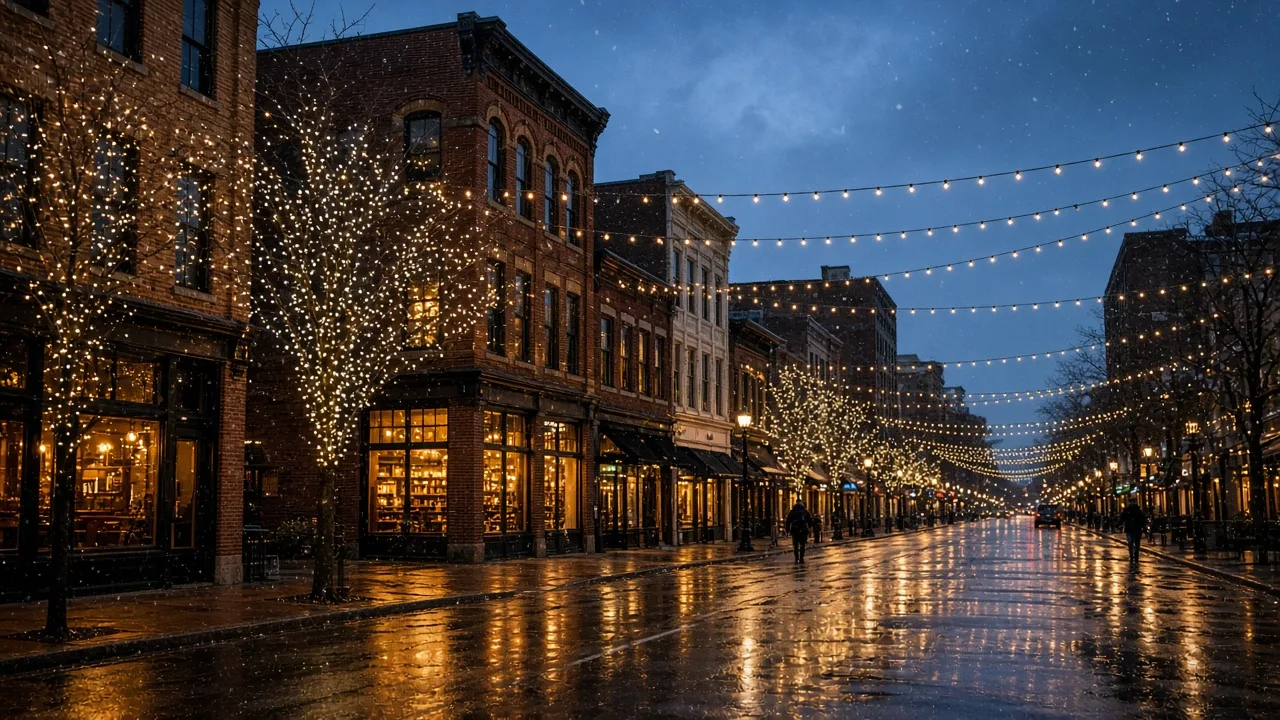
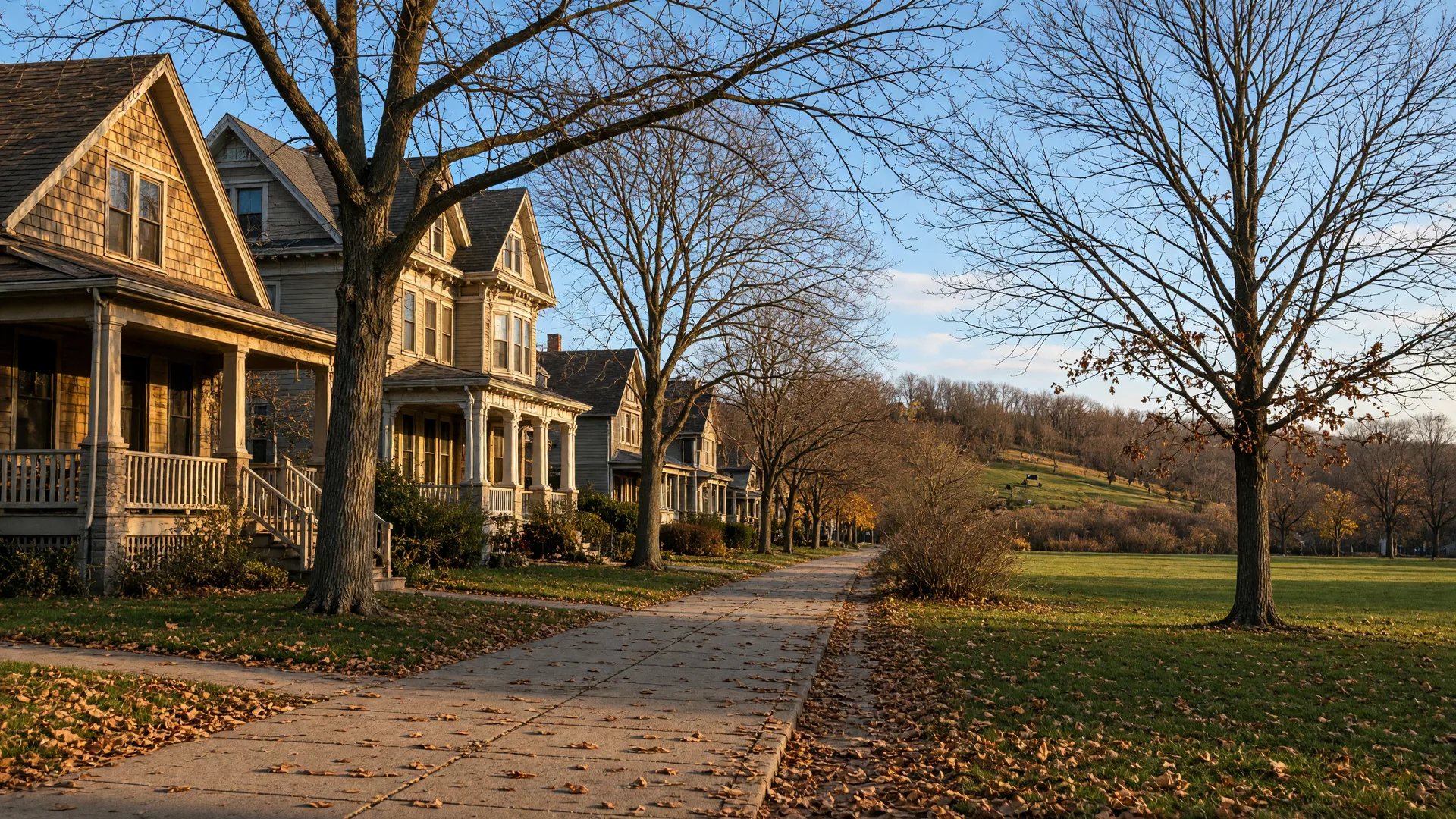
Burns Park sits on Ann Arbor's southeast side, inside ZIP 48104, bordered by Packard Street on one side and the University of Michigan's South Campus athletic fields and Stadium Boulevard on the other. It is a streetcar neighborhood: most of its homes went up between the 1890s and the 1930s, and the architectural mix runs to Queen Anne, Georgian, Dutch Colonial Revival, Tudor, and bungalow styles under a mature tree canopy. Central campus is about a 5-minute drive and a roughly 10-to-15-minute walk away, Michigan Medicine about 5 to 10 minutes, and Detroit Metro Airport about 30 to 45 minutes via I-94. If you want the walk-to-everything version of Ann Arbor, this is a short list.
A 15-acre green heart that anchors the block
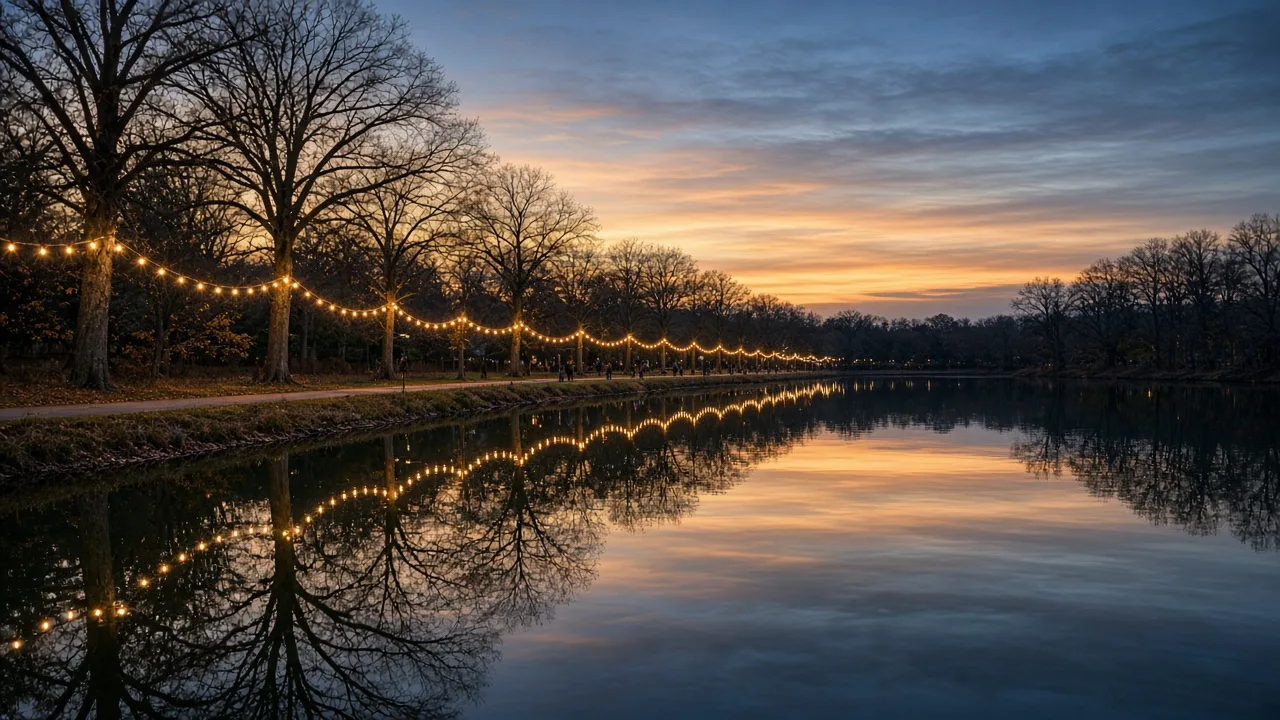
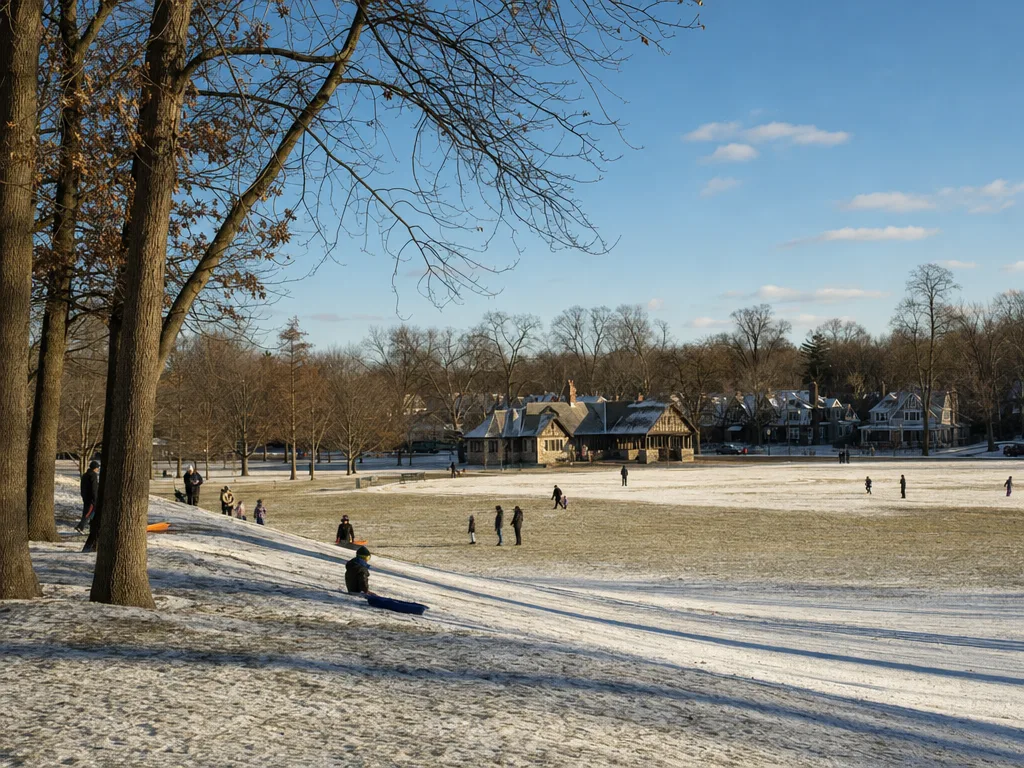
Burns Park, the neighborhood's namesake at 1300 Baldwin Avenue, was created in 1910 from the old county fairgrounds, and its perimeter tree line still follows the course of a former horse racetrack that rings the grounds. The park holds ballfields, basketball courts, tennis and pickleball courts, a playground, a pétanque court, and picnic tables, plus the Ann Arbor Senior Center at its southeast corner and Burns Park Elementary bordering its west side. In winter, the sledding hill, The Big Hill to anyone who grew up here, and the enclosed Warming Hut shelter with its seasonal ice rink make it the neighborhood's coldest-weather meeting spot. A few blocks north, Nichols Arboretum, the Arb, runs down to the Huron River, and Gallup Park's flat trails along the river are a short ride away.
Coffee, breakfast, and the Packard-Stadium strip
The commercial spine just north of the neighborhood runs along Packard Street and Stadium Boulevard, and it is exactly the kind of low-key, locally owned strip a walkable neighborhood feeds on. Argus Farm Stop's Packard Cafe at 1200 Packard Street is a year-round local farmers market and cafe with a patio, where you can grab a coffee, groceries, and a pastry in one stop. Side Biscuit at 1232 Packard Street is the spot for chicken wings and scratch-made sides, Black Diesel Coffee at 1423 E Stadium Boulevard is the neighborhood's specialty coffee shop, and Stadium Market, Fraser's Pub, Morgan & York, Mi Compadre, Eat, Burrito Joint, and Toarmina's round out the everyday lineup. The Produce Station, just across the railroad tracks, has been a fresh-produce staple for residents for years.
Landmarks within a walk
With the University of Michigan sitting at the neighborhood's doorstep, Burns Park doubles as a campus-adjacent landmark in its own right. Michigan Stadium, the Big House, is walkable from the neighborhood on game days, and the U-M Athletic Campus and the U-M Golf Course border the block to the south. The Arb, rolling down to the river, is the neighborhood's unofficial backyard, and the wider U-M campus, with the University of Michigan Museum of Art and the Exhibit Museum of Natural History, is within easy reach. It is a rare couple of square miles where city life and a green refuge genuinely overlap.
The school district picture
The neighborhood is served by Ann Arbor Public Schools; Burns Park Elementary borders the park itself, and district assignments follow address, so the specific school boundary for each home should be confirmed on a property-by-property basis. It is the same district that anchors most of Ann Arbor's family neighborhoods, which is usually the deciding draw for growing families.
Burns Park's market, by the late-2026 numbers
Burns Park's pricing sits at the premium end of Ann Arbor, and the small number of sales makes the headline number swing with every closing. On Realcomp II Ltd. IDX closed-sale data, the median sale price over the 12 months ending in early October 2026 was about $1,075,000 on just 6 closed sales, while a separate MLS-aggregated tracker put the median value for the trailing year near $935,000. Read the sub-areas and the difference becomes clearer: 2026 splits put Lower Burns Park around $581,000 and North Burns Park around $1.1 million, which is why the right median depends entirely on which block you mean. Days on market run wide for the same reason: the Realcomp-cited window shows a median of about 10 days on its few sales, while the aggregated tracker reports roughly 65 days on average. As of the late-October 2026 refresh, active inventory sat at 5 active listings plus 1 pending, with asking prices from about $799,900 to $1,899,000, and about 3.3 months of supply at the neighborhood's roughly 18 sales a year. The shape is consistent: Burns Park is a low-inventory, high-price-point market where the individual property's condition and block matter far more than any single median.
What the numbers mean if you are buying in Burns Park
- Get pre-approved before you tour. At a median near $1.1 million with 30-year rates still around 7 percent, the financing conversation usually decides the offer before the price does, and the discipline matters more here than in most Ann Arbor neighborhoods.
- Read the block, not the ZIP. Lower Burns Park around $581,000 and North Burns Park around $1.1 million are different markets, so compare closed sales on your specific street rather than relying on a neighborhood median.
- Move when the right home appears. With roughly five active listings at a time and about 3.3 months of supply, good properties get attention early, so come ready to tour and offer without a drawn-out first weekend.
- Confirm the school boundary and the millage for each home. District assignments follow address, and Ann Arbor's total property tax millage was 53.49 mills in 2024 applied to taxable value, a figure worth running property by property.
What the numbers mean if you are selling in Burns Park
- Price from your block's most recent closes, not last spring's range. With so few sales, the comparable set is small enough that the two or three homes that just sold on your street set the entire conversation.
- Present the condition story. Buyers comparing a home at this price point expect care, and the home that photographs and shows well earns a conversation a tired presentation cannot.
- Know where you sit in the mix. The active asking range runs from about $800,000 to $1.9 million, so where your home fits in that spread, and what its point of entry needs, is the pricing conversation to have early.
Where to start if Burns Park just moved up your list
Start with the full Burns Park area guide, which layers on the commute times, millage, school assignments, home styles, parks, and buyer FAQs in one place, then spend one quiet midweek walk around the park loop, the sledding hill, and the Packard-Stadium strip to time the pace of the neighborhood for yourself. If you want a read on a particular block or a particular home, that is exactly the call I pick up.
"Burns Park answers the trade-off most Ann Arbor buyers are trying to make: a real 15-acre green heart, schools within a walk, and a five-minute run to campus, at a price point that rewards knowing your specific block well."
Nicole Elizabeth Yaeger
Go deeper on Burns Park and your next move